NIEPA Moves to Reclaim West African Leadership in Education Planning, Targets UNESCO Category 2 Status in Renewed Paris Pact
ONDO, NIGERIA– In a significant stride to reposition Nigeria as a hub for educational excellence, the National Institute for Educational Planning and Administration (NIEPA), Ondo, has engaged the United Nations Educational, Scientific and Cultural Organization’s International Institute for Educational Planning (UNESCO-IIEP) in a high-level strategic parley aimed at upgrading the Institute to a UNESCO Category 2 Centre. The virtual meeting, facilitated by the Nigerian National Commission for UNESCO (NATCOM-UNESCO), marked the commencement of a renewed partnership designed to bridge capacity gaps and align Nigeria’s education sector planning with global best practices.
Setting the tone for the engagement, the Secretary General of NATCOM-UNESCO, Dr. Idowu Olagunju, conveyed the Federal Government’s mandate to “reintroduce and reawaken” the relationship between NIEPA and the Paris-based IIEP. Dr. Olagunju highlighted NIEPA’s rich history, recalling that the Institute played a pivotal mentorship role in the West African region, specifically assisting in the establishment of the Institute for Educational Planning and Administration (IEPA) in Ghana. He lamented that while the Ghanaian institute has attained international recognition, the “father” institute in Nigeria had lost ground due to a break in communication. Dr. Olagunju declared that NIEPA currently possesses “more than it takes” to be a Category 2 Centre, urging UNESCO to leverage the Institute’s massive infrastructure to facilitate training for administrators across the sub-region.
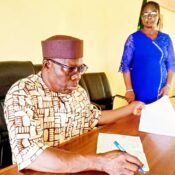
The Acting Director General of NIEPA, Dr. David Shofoyeke, presented a robust three-point agenda to the international delegation. He identified the upgrade to a UNESCO Category 2 Centre as the Institute’s primary objective, alongside an urgent need for strengthening institutional capacity. Dr. Shofoyeke specifically requested technical support in high-tech areas such as simulation modeling, micro-planning, and digital literacy to improve Education Sector Planning (ESP). He emphasized that the goal is to make NIEPA’s delivery “globally competitive” and capable of meeting international best practices, thereby allowing the Institute to better serve the English-speaking West African community through research and training.
Reacting to the presentation, the Lead for UNESCO-IIEP and Director of Training, Ms. Jimena Pereyra, expressed enthusiasm for the reconnection. She noted that the timing was fortuitous, as IIEP has recently launched a “Global Campus” integrating training offers from its offices in Paris, Dakar, and Buenos Aires. Ms. Pereyra highlighted that IIEP has developed deep expertise in hybrid and online learning design post-COVID, which aligns perfectly with NIEPA’s request for digital literacy and micro-planning support.
To operationalize this renewed alliance, the parties agreed on a joint “self-assessment” exercise to screen NIEPA’s current capacities and draft a comprehensive strategy for reinforcement. Addressing the critical challenge of funding, Ms. Pereyra advised aligning NIEPA’s revitalization with broader national education reforms and potential grants from the Global Partnership for Education (GPE). The meeting concluded with a resolution to immediately engage the UNESCO Abuja Office and the Local Education Group (LEG) to situate the partnership within the national framework.
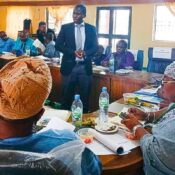
The strategic session was attended by top management from both institutions. On the NIEPA side, the Acting Director General, Dr. David Shofoyeke was accompanied by the Registrar, Dr. Festus Olaolu; Ag. Librarian, Mr. Adeniyi Adetunji; Head, Training and Research Department NIEPA Dr. Lara Ogunsola, UNESCO Desk Officer, Dr. Sunday Adegbesan; Head of ICT, Mr. Sina Akinyamoju; Fcido Plane Desk Officer, Dr. Nojeem Oresajo; New Media Officer, Bodunde Tenabe; and the Secretary to the Director General, Mr. John Amusan. The international delegation was led by Ms. Jimena Pereyra, supported by Programme Specialists Therrezinha Fernandez and Laura Paviot from UNESCO-IIEP.