NIEPA’s Resurgence: UNESCO Mandates Institute to Reclaim Technical Leadership Amidst Aggressive Repositioning Drive
By Bodunde Tenabe
ONDO — In a sustained and concerted drive to shake off years of institutional rot and reclaim its mandate as Nigeria’s premier capacity-building institution, the National Institute for Educational Planning and Administration (NIEPA-Nigeria) has achieved its third major diplomatic milestone in three months.
The aggressive repositioning campaign, spearheaded by the Acting Director-General, Dr. David Shofoyeke, commenced in December 2025 with a strategic bid for a UNESCO Category 2 status during an interface with the Paris-based International Institute for Educational Planning (IIEP). This momentum was swiftly consolidated in January 2026 through a landmark bilateral pact with Ghana’s Institute for Educational Planning and Administration (IEPA) focusing on digital quality assurance. Now, capping this progressive trajectory, NIEPA has received a resounding mandate from the United Nations Educational, Scientific and Cultural Organization (UNESCO) to assume absolute technical leadership of the nation’s education planning framework.
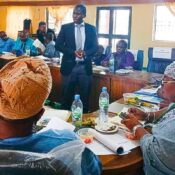
This latest directive was the focal point of a high-level virtual strategic meeting held on Thursday, February 12, 2026, at NIEPA’s corporate headquarters in Ondo. Setting the tone for the engagement, the Acting Director-General, Dr. David Shofoyeke, reiterated that NIEPA holds the statutory operational mandate for developing and reviewing education sector plans, as well as building the capacity of education planners for efficient service delivery.
Dr. Shofoyeke drew a sharp comparison between the Institute’s partnerships, noting that while UNICEF has consistently collaborated with NIEPA to support states in sector plan development, the partnership with UNESCO had “nosedived drastically” in recent years. He fervently urged the UNESCO delegation to revive this critical alliance by ensuring NIEPA’s inclusion in its programmes and providing necessary technical and financial support for conferences.
Bolstering the Ag. Director-General’s position, the Secretary General of the Nigerian National Commission for UNESCO (NATCOM-UNESCO), Dr. Olawale Olagunju, stressed that NIEPA has historically been at the forefront of capacity development for education leaders in Nigeria. He revealed that NIEPA actually “birthed” the Institute for Educational Planning and Administration (IEPA) in Ghana—which has since become a Category 2 Centre of Excellence—arguing that the Ghanaian institute continues to learn from NIEPA and that the Nigerian parent institute deserves the necessary support to achieve its mandate.
In his response, the UNESCO Nigeria Education Specialist, Dr. Oladimeji Adeyemi, issued a direct charge mandating the Institute to reclaim its position as the primary technical lead in the development and implementation of Nigeria’s Education Sector Plan. Dr. Adeyemi emphasized that for the Federal Ministry of Education to successfully execute its agenda, NIEPA must move beyond passive participation and become the active technical driver of the process.
He challenged NIEPA to take immediate ownership of the Conference of Directors of Planning (DPs), a critical forum for education planners across the country, stating that it is counterproductive to seek international consultants when NIEPA has the indigenous capacity to guide directors of planning, research, and statistics across the federation.
The UNESCO Education Specialist also delivered a candid assessment of the global financial climate, warning that the era of relying solely on automatic funding is over. He noted that the international funding landscape is shrinking drastically, urging NIEPA to pivot toward aggressive resource mobilization and “sell itself” to qualify for extrabudgetary grants. To this end, Dr. Adeyemi tasked NIEPA’s management with producing a comprehensive three-page capability statement. This document, he explained, will be utilized by the UNESCO Office to aggressively advocate for NIEPA at the Federal Ministry of Education, ensuring the Institute is strategically positioned at the forefront of national education projects.
Validating NIEPA’s pedigree and readiness for the task, the Institute’s Head of Training and Research, Dr. (Mrs.) Lara Ogunsola, recounted NIEPA’s history of technical dominance. Drawing from her ten-year experience as the Desk Officer for NIEPA-UNICEF projects, Dr. Ogunsola testified to NIEPA’s unparalleled expertise, recalling how the Institute successfully drove the development of Education Sector Plans for at least 30 states in Nigeria, alongside localized operational plans for selected Local Government Areas. Her remarks served as a powerful reminder of the Institute’s historical impact and its capability to execute the new mandate.
The Acting Director-General, Dr. David Shofoyeke, thanked the delegation for the timely “wake-up call” and accepted the challenge to restore the Institute’s visibility. He assured the commission that the requested capability statement would be promptly drafted and submitted, and committed to ensuring that NIEPA staff would actively participate in all upcoming UNESCO capacity-building programs.
The virtual session, which underscored the dawn of a new era of proactive engagement, also had in attendance key members of NIEPA’s management team, including the Registrar, Dr. Festus Olaolu, and the Bursar, Mrs. Lolade Shittu. Also in attendance from the UNESCO delegation were Mr. Anthony, Mr. Kola, Ms. Maureen, and Mr. Timi.