NIEPA NIGERIA Deepens Capacity Building Drive, Partners Ghana’s IEPA on Smart Quality Assurance at Strategic Bilateral Meeting
Reported by Tenabe Bodunde
ONDO – In a strategic move to reposition Nigeria’s education sector for global competitiveness, the National Institute for Educational Planning and Administration (NIEPA-NIGERIA), Ondo, has initiated a landmark partnership with the Institute for Educational Planning and Administration (IEPA), University of Cape Coast, Ghana.
The collaboration serves as a major boost to the ongoing rebranding efforts led by the Acting Director-General of NIEPA, Dr. David Shofoyeke, and aligns seamlessly with the “Renewed Hope Agenda” of President Bola Ahmed Tinubu and the policy direction of the Honourable Minister of Education, Dr. Tunji Alausa.
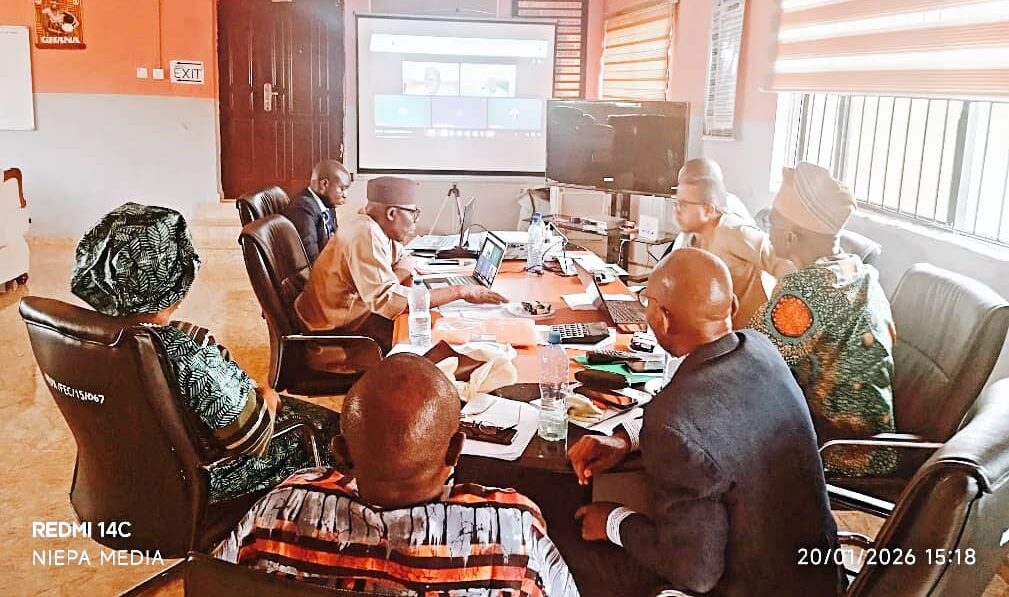
The virtual bilateral meeting, which held on Tuesday 20th January, 2026, attracted high-profile attendance, signaling strong inter-agency support for NIEPA’s new strategic direction and underscored the importance of synergy among specialized institutes in driving national development.
Notable dignitaries in attendance included the Secretary General of the NATCOM-UNESCO Office, Abuja, Dr. Olawale Olagunju; Director General IEPA Ghana, Prof. Michael Boakye-Yiadom; and the Director of the Regional Centre for Integrated River Basin Management (RC-IRBM), a UNESCO Category 2 Centre, Dr. Omogbemi Yaya.

Setting the tone for the engagement, Acting Director General NIEPA, Dr. David Shofoyeke emphasized that the Institute is pivoting from traditional pedagogical methods to “andragogy”—an adult-focused learning approach that prioritizes experiential learning, simulation models, and case studies. He noted that this shift is essential for effectively training mature education professionals who require practical solutions to real-world administrative challenges.
This vision was strongly supported by the Secretary General of NATCOM-UNESCO, Dr. Olawale Olagunju, who described the collaboration as timely and consistent with UNESCO’s framework for regional cooperation, pledging his office’s readiness to provide technical and diplomatic support.
The meeting also featured the unveiling of NIEPA’s homegrown “Smart Quality Assurance” technology, presented by the Institute’s Head of Statistics and Development, Dr. Seun Yusuf who showcased a suite of four innovative applications designed to digitize and streamline school monitoring, teacher evaluation, and data reporting. The apps, according to Dr. Yusuf, are designed to eliminate data bottlenecks and improve the integrity of education statistics, a core pillar of the current administration’s roadmap for the sector.
The Ghanaian delegation, led by the Director-General of IEPA, Prof. Michael Boakye-Yiadom and his deputy Director General, Mrs. Ama Serwah Nerquaye-Tetteh, expressed strong interest in adopting the technology and proposed a joint certification series leveraging these systems.
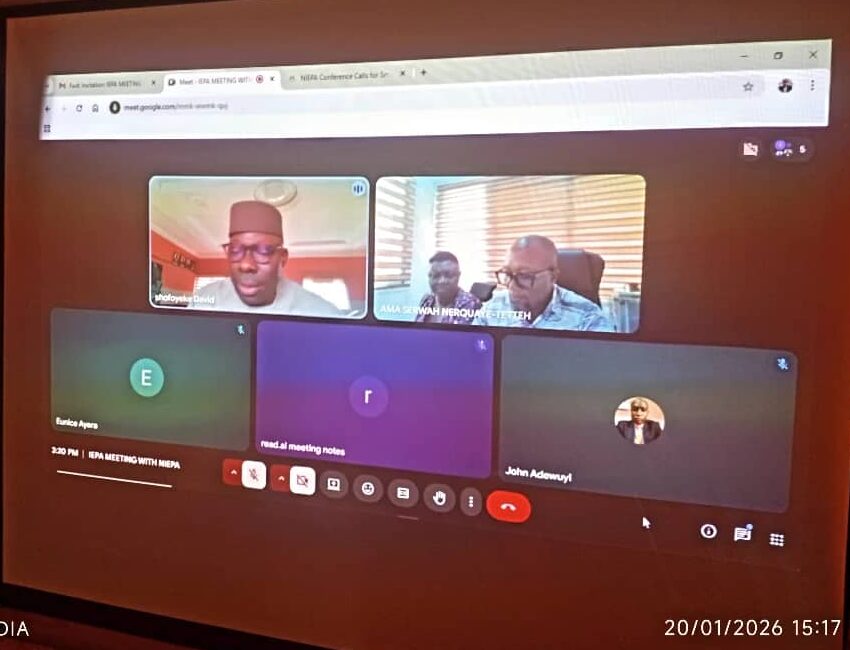
According to the Institute’s Media Officer Bodunde Tenabe, the meeting also addressed the critical issue of governance, specifically operationalizing Nigeria’s statutory seat on the IEPA Governing Board. Mrs. Ama Serwah Nerquaye-Tetteh led discussions on ensuring Nigeria’s voice is actively represented in the administration of the regional body. Consequently, it was resolved that a date would be set for the formal nomination of a Nigerian Board Member to solidify the country’s influence in West African educational planning.
Further cementing the partnership, the Deputy Director-General (Administration & General Services) of IEPA, Mrs. Ama Serwah Nerquaye-Tetteh, proposed the establishment of a chartered “African Institute for Educational Planners and Administrators”. The proposed body would function as a standard-setting organization for educational leaders across the continent, similar to professional bodies in law and accounting.
Both Institutes agreed to form a joint committee to draft a “Joint Action Plan” and Memorandum of Understanding (MOU) to formalize these initiatives, with Dr. Omogbemi Yaya also offering his institute’s support in sharing best practices for institutional management to ensure the success of the venture.