Digital Transformation in Education: NIEPA’s Capacity-Building Blueprint Endorsed at 85th JCCE Plenary
By Bodunde Tenabe
PORT HARCOURT: In a decisive move to modernise Nigeria’s education sector, a strategic framework proposed by the National Institute for Educational Planning and Administration (NIEPA), Ondo, to overhaul digital infrastructure and elevate the professional capacity of education planners and administrators has received top-tier endorsement at the 85th Plenary Meeting of the Joint Consultative Committee on Education (JCCE).
The landmark approval by the Education Planning Reference Committee clears the path for the framework to be officially considered by the National Council on Education (NCE). This progression marks a watershed moment in the nation’s quest to institutionalise digital competencies within its educational policy architecture, ensuring that service delivery aligns with global best practices.



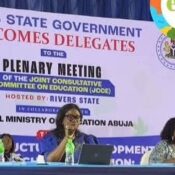
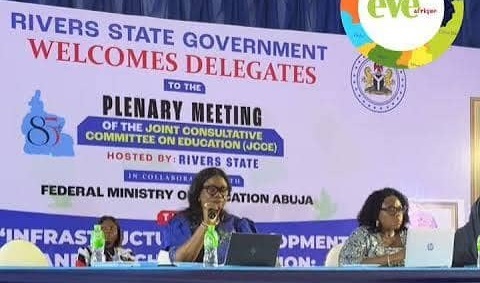
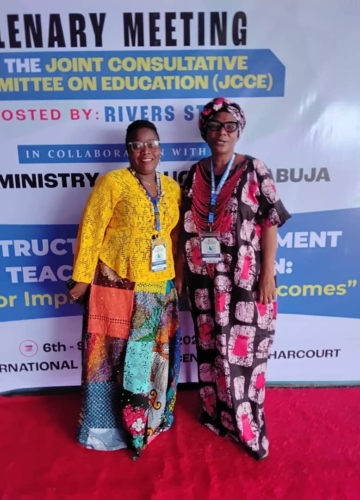
Held in Port Harcourt, Rivers State, from October 6 to 9, 2026, the 85th JCCE Plenary convened key education stakeholders, policymakers, and development partners from the 36 states and the Federal Capital Territory. The high-level convergence, hosted by the Rivers State Ministry of Education in synergy with the Federal Ministry of Education, was anchored on the theme, “Infrastructural Development and Teacher Motivation: Panacea for Improved Learning Outcomes.”
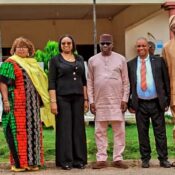
While the overarching theme spotlighted physical infrastructure and teacher welfare, NIEPA’s intervention critically expanded the discourse. Represented by Dr Opeyemi Oyekan and Dr Ibitola Eyarefe, the Institute articulated a compelling case for building the digital and administrative capacity of the personnel entrusted with planning, managing, and monitoring the education system. Their presentation underscored a fundamental reality: without a digitally fluent administrative workforce capable of leveraging data analytics and modern planning tools, broad infrastructural investments will yield limited learning outcomes.
Declaring the plenary open, the Rivers State Governor, Siminalayi Fubara, represented by the State Commissioner for Education, Dr Peters Nwagor, identified education as the bedrock of national development, affirming that sustainable educational improvements require a motivated workforce supported by robust, modern infrastructure.
Conveying the strategic vision of the Honourable Minister of Education, Dr Maruf Olatunji Alausa, and the Minister of State for Education, Professor Suwaiba Said Ahmad, the Acting Permanent Secretary of the Federal Ministry of Education, Dr Folake Olatunji-David, emphasised the Federal Government’s unwavering commitment to systemic educational reforms. The Permanent Secretary of the Rivers State Ministry of Education, Dr Mina Tele Ikuru, also lauded the collaborative efforts driving the sector forward.


The endorsement of this capacity-building blueprint serves as a profound validation of NIEPA’s specialised mandate. Operating under the visionary leadership of its Director-General and Chief Executive, Dr A. D. Shofoyeke, NIEPA has consistently leveraged national policy platforms to champion data-driven and digitally enabled education management. Dr Shofoyeke’s administration has fundamentally repositioned the Institute to meet the evolving demands of the 21st-century knowledge economy, aligning seamlessly with the Federal Ministry of Education’s Key Performance Indicators for sector-wide digitalisation and capacity enhancement.
Furthermore, this policy milestone complements NIEPA’s expanding footprint in institutional collaborations across the sub-region and beyond. The Institute’s strategic partnerships with key bodies—notably the Nigerian National Commission for UNESCO (NATCOM UNESCO), Abuja; the Institute for Educational Planning and Administration (IEPA), Ghana; UNICEF; and the Foreign, Commonwealth & Development Office (FCDO)—continue to enrich education sector planning, policy dialogue, and systemic capacity development. These synergies ensure that Nigeria’s education managers are not only globally competitive but practically equipped to translate policy into measurable classroom success.
As the proposal advances to the National Council on Education, it represents a critical leap forward. Its ultimate adoption will firmly integrate digital infrastructure and high-level capacity development into the nucleus of Nigeria’s educational planning, guaranteeing a more resilient, efficient, and future-ready public education system.